
The Ultimate Guide to UV Curing Casting Resins: When Is It Actually Necessary?
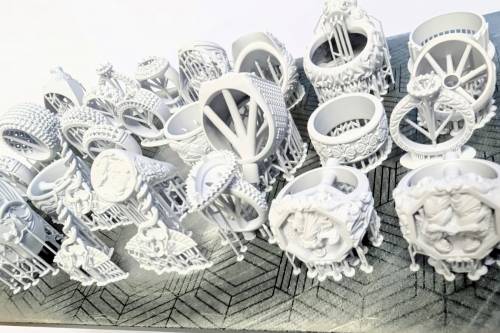
Are you wasting time UV curing your casting resins? We strongly suggest taking a look at this article to understand the true performance of BlueCast resins.
Casting Resins: UV Post-Curing Yes or No? When Is It Really Necessary.
Today, the market offers a wide variety of casting resins, ranging in price from $50 to $400 per kg. Each has unique characteristics and different levels of safety for the user, but above all—when it comes to user experience—they require specific post-processing procedures.
What is the real purpose of UV post-curing?
The main purpose of post-wash UV curing, as everyone knows, is to complete the cross-linking of the polymers. During the printing phase, cross-linking never reaches 100%, usually stopping around 70-80%. UV curing, by bringing this to completion, makes the prints much more stable during the delicate burnout phase.
Many cheap acrylic-based resins require prolonged UV curing for three fundamental reasons:
-
Controlled combustion: A fully cross-linked polymer breaks down and carbonizes much more predictably at high temperatures.
-
Chemical isolation: It helps prevent unwanted chemical reactions between the printed models and the investment.
-
Control of thermal expansion: When placed in the oven, prints made with cheap resins expand with the heat before reaching the burnout point. If the resin is not perfectly "vitrified" (thanks to extra UV exposure), thermal expansion is much more pronounced and risks creating cracks inside the investment flask.
The oxygen problem and alternative solutions
The number one enemy of UV curing is oxygen. When you cure a part in the open air, the oxygen inhibits the chemical reaction on the very surface of the piece, sometimes leaving it sticky and susceptible to reacting with the investment.
To overcome this problem and ensure a decent burnout, specific techniques are used for some resins:
-
UV curing in glycerin: Being denser than air, glycerin isolates the part from oxygen, ensuring a perfectly polymerized surface.
-
Thermal Curing in water: The very first monomeric resins (called "castables") needed to be boiled in water. Heat accelerates and completes cross-linking, while boiling water slightly expands the micropores of the resin, literally melting and washing away any traces of trapped liquid monomer.
Why don't BlueCast resins require UV curing to cast well?
The new BlueCast resins are all based on waxy techno-polymers that, instead of expanding during burnout, melt and slip away along the sprue channels. A prime example is X-Wax, the first resin in the world to contain 80% real wax.
Furthermore, over the years BlueCast has developed a series of highly technical polymers capable of curing by simple immersion in alcohol. This phenomenon is particularly evident with X-One and X-Wax: if washed correctly, the pieces turn white (color-changing effect) and are perfectly dry. For X-Filigree and X-Wax Filigree the UV postcuring is in any case mandatory,
The parts of the models that remain dark after washing indicate areas where the resin was not cleaned properly or where the layers did not fuse perfectly, preventing the alcohol from completing the cross-linking of the pieces.
For all the latest resins in the line (like X-One and X-Wax), UV curing is only suggested in two cases:
-
If dark, unwhitened parts are visible on the model.
-
If you want to proceed with assembling the casting tree immediately after washing.
This brief pass under the UV light completes the cross-linking of the poorly washed or printed parts and accelerates the chemical process triggered by the alcohol.
Happy printing!